(Plain Text Version)
Humor in the Gospels?
A good joke starts with a situation. The situation becomes more and more complicated. The joke ends with the punch line, where things have become hopeless.
The Parable of the Prodigal Son
In the Parable of the Prodigal Son (Luke 15:11-32), Jesus taught His listeners that the vices of selfishness, greed and lust are no match for God’s warm welcome to those turn to Him. It concludes with a warning to us to be merciful, just as God is merciful. So, what is funny here?
The Situation
The prodigal son has alienated himself from his wealthy family and from his country. Just as his money runs out, a severe famine breaks out. Hunger takes the place of the pleasure he sought so eagerly.
It Gets Worse
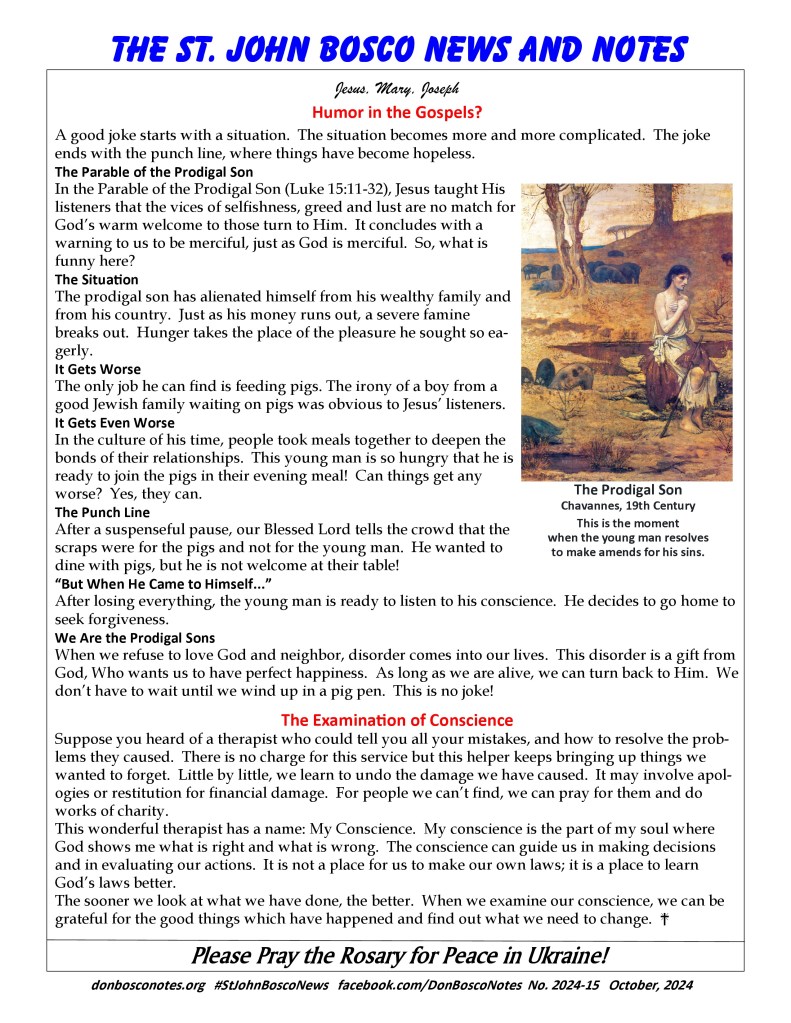
The only job he can find is feeding pigs. The irony of a boy from a good Jewish family waiting on pigs was obvious to Jesus’ listeners.
It Gets Even Worse
In the culture of his time, people took meals together to deepen the bonds of their relationships. This young man is so hungry that he is ready to join the pigs in their evening meal! Can things get any worse? Yes, they can.
The Punch Line
After a suspenseful pause, our Blessed Lord tells the crowd that the scraps were for the pigs and not for the young man. He wanted to dine with pigs, but he is not welcome at their table!
“But When He Came to Himself…”
After losing everything, the young man is ready to listen to his conscience. He decides to go home to seek forgiveness.
We Are the Prodigal Sons
When we refuse to love God and neighbor, disorder comes into our lives. This disorder is a gift from God, Who wants us to have perfect happiness. As long as we are alive, we can turn back to Him. We don’t have to wait until we wind up in a pig pen. This is no joke!
The Examination of Conscience
Suppose you heard of a therapist who could tell you all your mistakes, and how to resolve the problems they caused. There is no charge for this service but this helper keeps bringing up things we wanted to forget. Little by little, we learn to undo the damage we have caused. It may involve apologies or restitution for financial damage. For people we can’t find, we can pray for them and do works of charity.
This wonderful therapist has a name: My Conscience. My conscience is the part of my soul where God shows me what is right and what is wrong. The conscience can guide us in making decisions and in evaluating our actions. It is not a place for us to make our own laws; it is a place to learn God’s laws better.
The sooner we look at what we have done, the better. When we examine our conscience, we can be grateful for the good things which have happened and find out what we need to change.
#StJohnBoscoNews
 St. John Bosco News and Notes