(Plain Text Version)
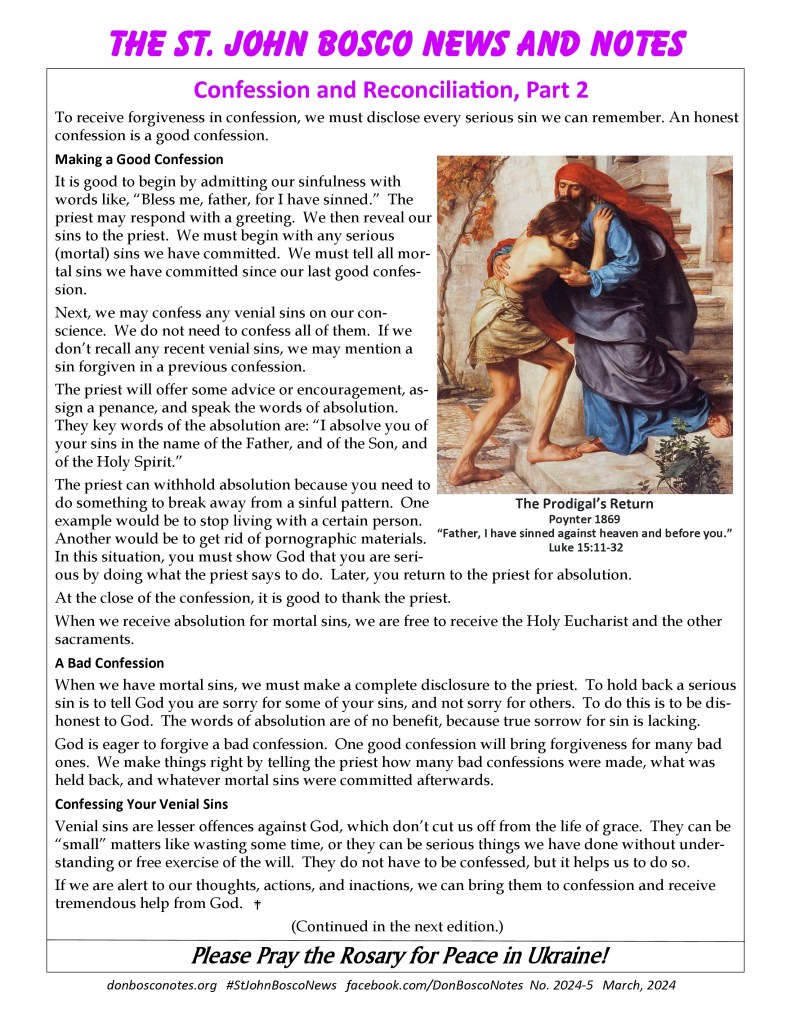
To receive forgiveness in confession, we must disclose every serious sin we can remember. An honest confession is a good confession.
Making a Good Confession
It is good to begin by admitting our sinfulness with words like, “Bless me, father, for I have sinned.” The priest may respond with a greeting. We then reveal our sins to the priest. We must begin with any serious (mortal) sins we have committed. We must tell all mortal sins we have committed since our last good confession.
Next, we may confess any venial sins on our conscience. We do not need to confess all of them. If we don’t recall any recent venial sins, we may mention a sin forgiven in a previous confession.
The priest will offer some advice or encouragement, assign a penance, and speak the words of absolution. They key words of the absolution are: “I absolve you of your sins in the name of the Father, and of the Son, and of the Holy Spirit.”
The priest can withhold absolution because you need to do something to break away from a sinful pattern. One example would be to stop living with a certain person. Another would be to get rid of pornographic materials. In this situation, you must show God that you are serious by doing what the priest says to do. Later, you return to the priest for absolution.
At the close of the confession, it is good to thank the priest.
When we receive absolution for mortal sins, we are free to receive the Holy Eucharist and the other sacraments.
A Bad Confession
When we have mortal sins, we must make a complete disclosure to the priest. To hold back a serious sin is to tell God you are sorry for some of your sins, and not sorry for others. To do this is to be dishonest to God. The words of absolution are of no benefit, because true sorrow for sin is lacking.
God is eager to forgive a bad confession. One good confession will bring forgiveness for many bad ones. We make things right by telling the priest how many bad confessions were made, what was held back, and whatever mortal sins were committed afterwards.
Confessing Your Venial Sins
Venial sins are lesser offences against God, which don’t cut us off from the life of grace. They can be “small” matters like wasting some time, or they can be serious things we have done without understanding or free exercise of the will. They do not have to be confessed, but it helps us to do so.
If we are alert to our thoughts, actions, and inactions, we can bring them to confession and receive tremendous help from God.
(Continued in the next edition.)
#StJohnBoscoNews
 St. John Bosco News and Notes