(Plain Text Version)
When we are estranged from God by serious sin, we are forgiven and restored through the Sacrament of Reconciliation. For less serious sins, the same sacrament brings forgiveness and strength to live a holy life.
The Power to Forgive Sins
During His public ministry, Jesus was opposed for forgiving sins. His enemies asserted, “Who can forgive sins but God alone” (Mark 2:7). They didn’t consider that Jesus actually is God.
On the first Easter, Jesus delegated the power to forgive sins to the Apostles with the words, “Receive the Holy Spirit. If you forgive the sins of any, they are forgiven them; if you withhold forgiveness from any, it is withheld” (John 20:23).
To this day, the bishops and priests of the Catholic Church carry out Christ’s ministry of forgiveness and restoration through the Sacrament of Reconciliation.
This sacrament is also known as the Sacrament of Penance, the Sacrament of Confession, and the Sacrament of Peace.
We Need Help to be Reconciled to God
It may seem easy to confess our sins directly to God, without revealing them to a priest. In reality, this approach brings anxiety. Why? It is insincere for a Catholic to approach God for forgiveness while rejecting the method He has provided for us. We won’t receive true peace until we live the life of the sacraments properly. The Sacrament of Reconciliation brings peace, because we know that we have done what God wants us to do.
Where the Sacrament is Celebrated
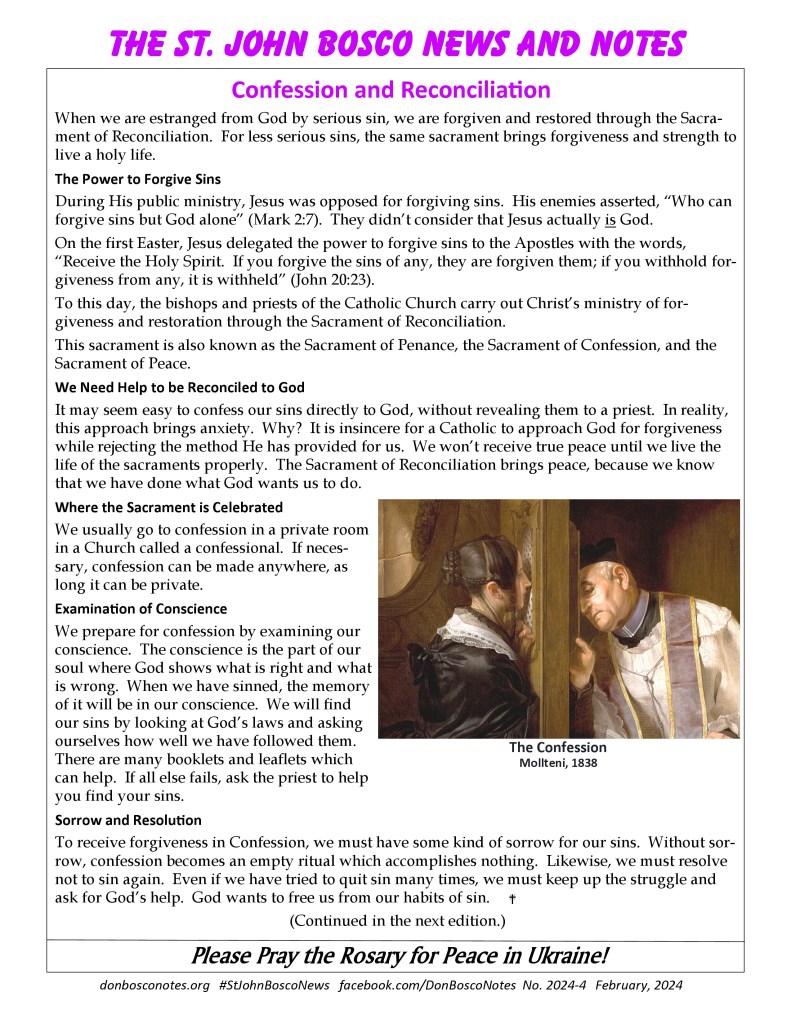
We usually go to confession in a private room in a Church called a confessional. If necessary, confession can be made anywhere, as long it can be private.
Examination of Conscience
We prepare for confession by examining our conscience. The conscience is the part of our soul where God shows what is right and what is wrong. When we have sinned, the memory of it will be in our conscience. We will find our sins by looking at God’s laws and asking ourselves how well we have followed them. There are many booklets and leaflets which can help. If all else fails, ask the priest to help you find your sins.
Sorrow and Resolution
To receive forgiveness in Confession, we must have some kind of sorrow for our sins. Without sorrow, confession becomes an empty ritual which accomplishes nothing. Likewise, we must resolve not to sin again. Even if we have tried to quit sin many times, we must keep up the struggle and ask for God’s help. God wants to free us from our habits of sin.
(Continued in the next edition.)
#StJohnBoscoNews
 St. John Bosco News and Notes